Year: 2025
Issue: 4 (18)
Pages: 86
83
1977

About Us

Sustainable Development and Engineering Economics (SDEE) is an international scientific journal that was founded by Peter the Great St. Petersburg Polytechnic University in 2021. Journal publishes articles on the following, but not limited to, main topics:

  • Economics of engineering and innovation decisions as a part of sustainable development

    This section presents papers dedicated to examining the effects of new technology implementation at local and regional levels. In papers that address this topic, we expect researchers to discuss the economic and financial aspects of new technological developments both for companies and for the regions where they operate. Another area of interest to consider is how new technologies are likely to modify the relationship between the state and citizens. In this sense, the development of digital identities will be a new challenge for the state. In addition, new services within the areas of e-learning and e-government have become key to regional planning and operation. Scholars may also present papers that discuss how new engineering solutions can reshape both business operations and public services, and how these solutions can result in either detrimental or beneficial effects for the complex development of regional territories. Such engineering solutions may derive from any field of engineering, including information-technology engineering. Papers devoted to the development of frameworks and models that support decision-making processes in this field are also welcomed. Authors might choose to discuss how the COVID-19 pandemics has affected the technological developments and decisions made by companies and government. This topic addresses many of the United Nation’s Sustainable Development Goals. For example, Goal 8: Decent work and economic growth; Goal 9: Industry, innovation and infrastructure; Goal 11: Sustainable cities and communities.

  • Enterprises and sustainable development of the regions

    The focus of this topic is the general impact of enterprises on the sustainable development of different regions around the globe. Therefore, we shift focus from precise technologies to enterprises and industries. Potential areas for discussion could be circular economies and closed resource cycles. We invite scholars to submit papers that present systematic results on sustainable business models and research on sustainable industry development. This research might also contain assessments of the direct and indirect effects of certain companies, in particular, and industrial development, in general. Direct effects can be measured through the evaluation of the concrete damage or benefits that are generated by these companies. We would also welcome papers that assess the different types of spillovers that can be generated by enterprises, economic clusters, industries and global value chains. These spillovers may occur in a variety of areas—for example, environmental, social, and governance (ESG) within corporations, knowledge or technology. In addition, we expect authors to discuss the impact of regional policies and special economic regimes on enterprise development. Industry-specific research is also welcome—for example, issues related to energy economics, energy strategy or energy policy. Research published on this topic would contribute to making progress in achieving aspects of the UN Sustainable Development Goals, such as, ‘Ensure access to affordable, reliable, sustainable and modern energy for all’ (from Goal 7); ‘Promote sustained, inclusive and sustainable economic growth, full and productive employment and decent work for all’ (from Goal 8); ‘Make cities and human settlements open, safe, sustainable and sustainable’ (from Goal 11); ‘Ensure sustainable consumption and production patterns’ (from Goal 12).

  • Sustainable development of regional infrastructure

    We believe that the UN’s collection of Sustainable Development Goals (SDGs) will be an indispensable instrument for building a better world. The various concepts that lie behind this ambitious agenda—the need for a defined vision, the importance of multi-stakeholder partnerships, the emphasis on accountability and measurement, and the acknowledgment that environmental, social, and economic goals are interconnected—together, will provide the engine for progress. This topic is dedicated to research that discusses the role of different types of infrastructure—physical, innovation, digital, smart, financial, transportation and entrepreneurial—in the sustainable development of regions and enterprises. We expect authors to identify and assess the effects of infrastructure development on different aspects of economic, innovative, social and environmental regional development. Accordingly, we are open to submissions on such topics as waste management, smart logistics systems and smart cities, among others. Research in the area of digital/smart/intelligent cities must address the issues of both information management and information security that arise out of these developments. Work published on this topic mainly contributes to the UN SDG 9, which aims to ‘build resilient infrastructure, promote inclusive and sustainable industrialisation and foster innovation’, as well as to other goals relating to the sustainable use of sea, land, energy and other resources.

  • Management of knowledge and innovation for sustainable development

    Innovation helps companies to avoid stagnation and fosters economic growth. Innovation management is the structuring of a specific innovation process, with a beginning (input), middle (processing), and end (output and generation of results). Innovation management consists of establishing the means and methods to generate value and of putting ideas into practice. It is important for avoiding systemic stagnation in organisations and can help to place a focus on corporate sustainability. Sustainability, according to the United Nations, has three pillars: economic, social, and environmental. Usually, the focus of innovation is centered on the economic aspect of sustainability, but it can also be expanded to encompass the other two aspects. The strategic vision of a company must include innovative actions that are aligned with business objectives to promote synergy between available resources—human, material, technological and financial. This will usually lead to an organisation's productive, operational and managerial processes being updated, rationalised or, sometimes, disrupted. This can improve outcomes for an organisation by making the services or products provided to customers more attractive and effective. Research in the area of this topic can contribute to innovation management at the individual, enterprise, and regional levels. The focus of such research could be not only on the economic aspects of innovation management but also on its social and environmental aspects. We would also welcome papers that discuss closed and open innovation models and their contribution to the achievement of sustainable development.

Publication languages:

  • English,
  • Russian with the subsequent sending of materials for translation by the journal editors office.

The target audience is Russian- and English-speaking readers. Readers from different countries can:

  • find an article by its English elements;
  • read the text of the article in their native language, using machine translation.

Peer review is double-blind, performed by third-party reviewers from a group of specialists in the field of peer-reviewing materials. The editorial board may reject articles submitted with extreme violations of the rules of the journal, articles that do not correspond to the topics of the journal, or articles that do not correspond to the capabilities of the journal for its peer review.

The journals do not charge authors for the preparation, reviewing, publishing, and posting of articles in the public domain.

    All articles have gold open access status. Articles are licensed under Creative Commons Attribution-NonCommercial 4.0 International License (CC BY-NC 4.0).

    The authors must submit a license agreement signed by all authors. The authors are required to enter into license agreement on the transfer of the rights to use the Work of Intellectual Property to the Publisher. This may be submitted after the article has been accepted for publication.

    Digital Preservation of articles is provided by:

    • the journal’s website,
    • the Electronic Library of Peter the Great St. Petersburg Polytechnic University, Russian Federation.

    The journal began publishing in the summer of 2021. The journal releases 4 issues per year.

    Founder and publisher: Peter the Great St. Petersburg Polytechnic University, Saint Petersburg, Russian Federation.

    Editor in chief: Doctor of Economics, professor, Irina Rudskaya
    Peter the Great St. Petersburg Polytechnic University, Saint Petersburg, Russian Federation.
    e-mail: rudskaya_ia@spbstu.ru

    Editorial Board

     Rudskaia
    Rudskaia
    Editor-in-chief of the «Sustainable Development and Engineering Economics» journal, Professor of Graduate School of Industrial Economics
    Peter the Great St. Petersburg Polytechnic University, Saint-Petersburg, Russia
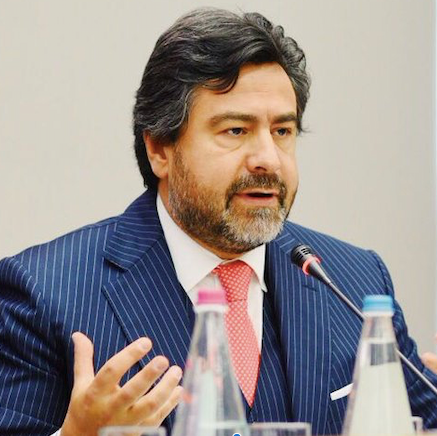
    Alberto Tron
    Alberto Tron
    Full Professore of Corporate Finance; Adjunct Professor of Corporate Finance, Department of Finance
    Universitas Mercatorum, Rome, Italy; Boccony University, Milan, Italy
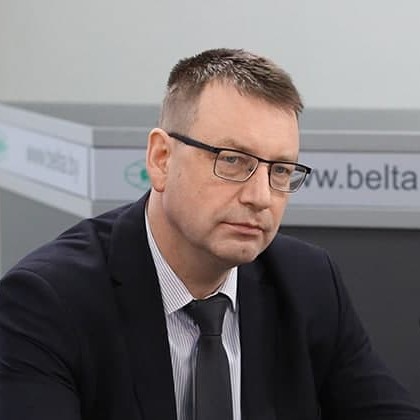
    Aleksei Bykov
    Aleksei Bykov
    Vice-Rector for Research
    Belarus State Economic University, Minsk, Republic of Belarus
    Aleksei Gintciak
    Aleksei Gintciak
    Head of Laboratory of Digital modelling of Industrial systems
    Peter the Great St. Petersburg Polytechnic University, Russian Federation
    Alla Kravets
    Alla Kravets
    Professor of the Department of «Computer-aided design and Search engineering»
    Volgograd State Technical University, Volgograd, Russia
    Andrew Alola
    Andrew Alola
    Assistant professor at the Department of Economics
    School of Accounting and Finance, University of Vaasa, Finland
    Angi Erastievich Skhvediani
    Angi Erastievich Skhvediani
    Researcher at Graduate School of Industrial Economics
    Peter the Great St. Petersburg Polytechnic University, Saint-Petersburg, Russia
    Dmitrii Grigorievich Rodionov
    Dmitrii Grigorievich Rodionov
    Director of Graduate School of Industrial Economics
    Peter the Great St. Petersburg Polytechnic University, Saint-Petersburg, Russia
    Eduarda Ferreira
    Eduarda Ferreira
    Full Professor, Mathematic
    Instituto Superior de Engenharia do Porto, Poliécnico do Porto, Porto, Portugal
    Emma Juaneda-Ayensa
    Emma Juaneda-Ayensa
    Associate Professor, Department of Economics and Busines
    University of La Rioja, Logroño, La Rioja, Spain
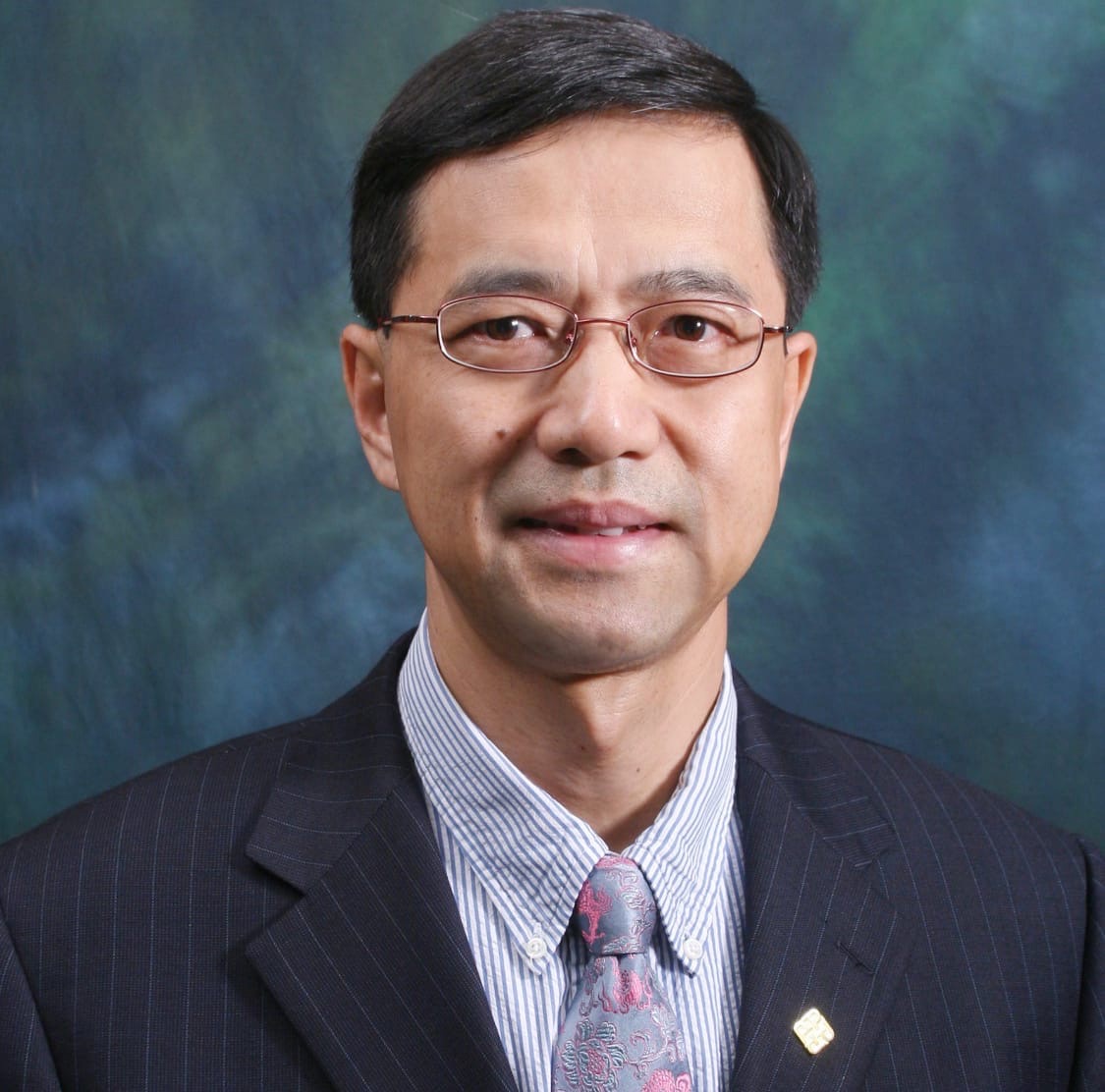
    Geoffrey Shen
    Geoffrey Shen
    Chair Professor of Construction Management
    The Hong Kong Polytechnic University, Hong Kong
    Gilyan Fedotova
    Gilyan Fedotova
    leading research scientist
    Federal Research Center «Informatics and Management» of the Russian Academy of Sciences, Moscow, Russia
    Igor Dukeov
    Igor Dukeov
    Researcher at School of Business and Management
    LUT University, Lappeenranta, Finland
    Ionel Bostan
    Ionel Bostan
    Professor, Faculty of Law and Administrative Sciences
    Ștefan cel Mare University, Suceava, Romania
    Iosif Tukkel
    Iosif Tukkel
    Professor of the Graduate School of Project Activity and Innovation in Industry, Member of the Council U.2.3.4.44 in the scientific specialty 2.3.4 — Control in organizational systems
    Peter the Great St. Petersburg Polytechnic University, Saint Petersburg, Russia
    Irina Brusakova
    Irina Brusakova
    Professor, Head of the Department of Innovation and Technological Entrepreneurship
    St Petersburg Electrotechnical University «LETI», St. Petersburg, Russia
    Lev Mazelis
    Lev Mazelis
    Professor at the Mathematics and Modeling Department, Аcting director School of Digital Economics and Business Analytics
    Vladivostok State University, Vladivostok, Russia
    Luis Manuel Borges Gouveia
    Luis Manuel Borges Gouveia
    Full Professor, Faculty of Science and Technology
    University Fernando Pessoa, Porto, Portugal
    Mariya Molodchik
    Mariya Molodchik
    senior research scientist, professor
    HSE University, Perm, Russia
    Maxim Shcherbakov
    Maxim Shcherbakov
    Head of the Department of Computer-aided Design and Search Engineering Systems
    Volgograd State Technical University, Volgograd, Russia
    Mohammed Berawi
    Mohammed Berawi
    director of Center for Sustainable Infrastructure Development (CSID) Universitas Indonesia, director of ASEAN University Network — Sustainable City and Urban Development (AUN-SCUD), Indonesia
    Universitas Indonesia, Depok, Indonesia
    Nikita Moiseev
    Nikita Moiseev
    Professor of the Department of Mathematical Methods in Economics
    Plekhanov Russian University of Economics, Moscow, Russia
    Olga Kozhevina
    Olga Kozhevina
    Professor of the Department of Management
    Bauman Moscow State Technical University, Moscow, Russia
    Olga Peskova
    Olga Peskova
    Professor of the Department «Management and Finance of Production Systems», Vice-Rector for Youth Policy
    Volgograd State Technical University, Volgograd, Russia
    Sergey Arzhenovskiy
    Sergey Arzhenovskiy
    consultant of economic department of Rostov regional division of the Southern main branch of the Central bank of the Russian Federation
    Southern Main Branch of the Central Bank, Rostov-on-Don, Russia
    Sergey Georgievich Redko
    Sergey Georgievich Redko
    Professor, Director of the Graduate School of Project Activity and Innovation in Industry
    Peter the Great St. Petersburg Polytechnic University, Saint Petersburg, Russia
    Sergey Pavlovich Sosnovskikh
    Sergey Pavlovich Sosnovskikh
    Senior Lecturer in International Business. Marketing, International Business and Tourism Department, Faculty of Business & Law
    Manchester Metropolitan University, Manchester, United Kingdom
    Tatiana Kuzmina
    Tatiana Kuzmina
    Professor at the Graduate School of Business and World Economy
    Plekhanov Russian University of Economics
    Tatiana Jurievna Kudryavtseva
    Tatiana Jurievna Kudryavtseva
    Viсe director for science, professor of Graduate School of Industrial Economics
    Peter the Great St. Petersburg Polytechnic University, Saint-Petersburg, Russia
    Tengiz Magradze
    Tengiz Magradze
    Georgian Technical University, Tbilisi, Georgia
    Zhikai Wang
    Zhikai Wang
    Professor in School of Economics
    Zhejiang University, Hangzhou, China